A decade ago, Hamilton Airport was a $60 million asset leaning almost entirely on one airline. Today it is worth $300 million, and it has its sights set on becoming a billion-dollar asset by the mid-2030s.
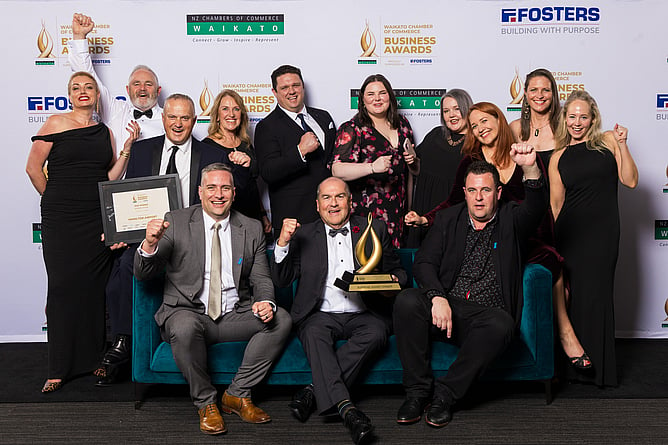
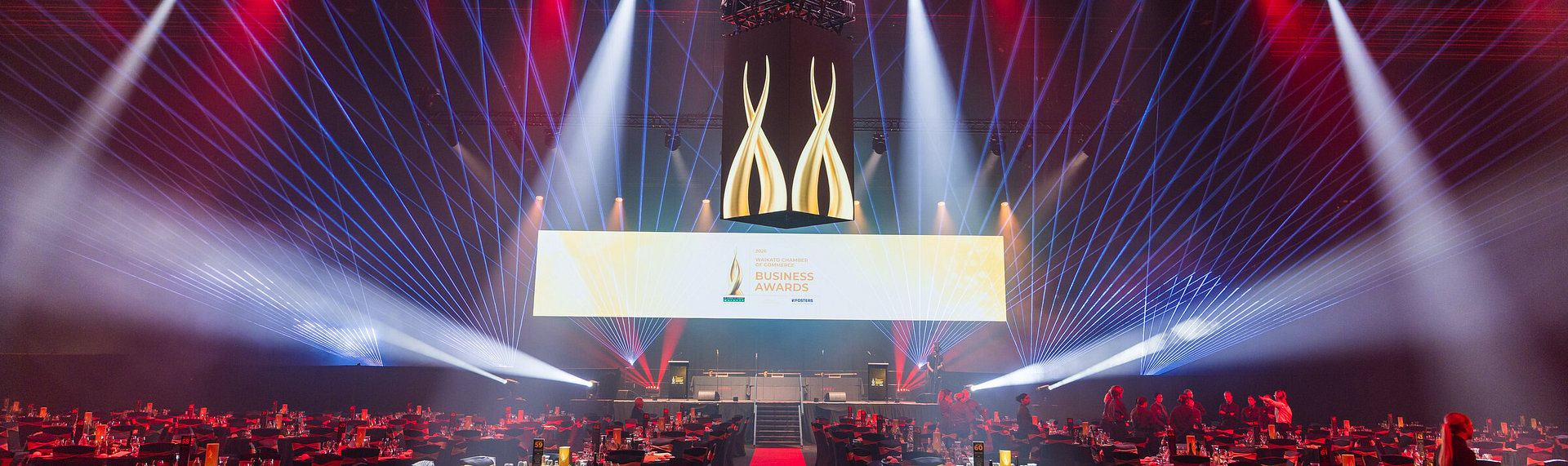
That trajectory has now earned it the top prize in Waikato business. At the 2026 Waikato Business Awards, supported by Fosters, the airport was named Supreme Winner after also taking out the Business Growth & Strategy Award and the Sustainability Award. Chief executive Mark Morgan was named CEO of the Year.
The growth story starts in late 2017, when the airport began writing a 10-year strategic plan. At the time, Morgan says, the aeronautical business was “somewhat broken”.
“It was totally reliant on one airline and therefore we had no resilience built into the organisation. Income was concentrated in aviation and needed diversifying.”
The answer was diversification: land, property development and a hotel renovation. When COVID-19 hit, the recently acquired hotel became a managed isolation facility and for two years effectively replaced the airport’s aeronautical income. The hotel was acquired by the Airport from a receivership in 2018 and has since gone on to be renovated extensively, achieving a Qualmark 4.5 star with Gold Enviro rating under the management of national brand JetPark Hotels.
“What that taught us is that if you execute strategy, you will drive business performance and business success.”
Last year the strategy was rewritten to shift the focus from diversification to growth. “How do we turbocharge and grow the group?”
International flights returned sooner than expected, with the deal signed in 2024. Morgan says standing up the border meant negotiating with seven government agencies, which required extensive coordination.
The two international services now generate about $50 million in economic benefit a year and have created more than 60 jobs at the airport, and 300 across the region. “There’s a lift in pride in the region, and a lift in pride in the airport as a result.”
Judges praised the airport for reducing its reliance on any single source of income, and the “quality, stability and depth” of its leadership team.
Kānoa funding will support runway and apron extensions as part of a regional resilience initiative, enabling Hamilton Airport to accommodate wide-body jets if required. Next up is freight – 15 hectares at Titanium Park’s Precinct North has been set aside for a future freight hub. Morgan is confident the hub will become a reality.
“I wouldn’t say if it’s built, but when it’s built,” he said.
Hamilton Airport holds Level 4 Transformation status under Airport Carbon Accreditation. Despite busier operations and the return of international passengers, emissions per customer have improved from 2% below the base year at the time of judging to 3% below today, a result judges called “especially compelling.
At Titanium Park's Precinct North, the first major design-build has a roof covered in solar panels and captures stormwater for reuse on site. The airport’s own solar farm supplies over half the terminal’s power. A 15-hectare ecological corridor is being restored with 75,000 native plants and trees, and the airport is protecting habitat for pekapeka, through native planting, wetland enhancement and pest control.
Judges also singled out its willingness to share what it has learned with smaller airports.
Behind the Supreme award is a team of about 50, with a core group of 13 driving the business, supported by the operational teams. Many have been there five to 10 years.
“You can’t do it without competence, and you can’t do it without attitude,” Morgan says. “The team really cares about the company.”
He admits the airport is not always good at stopping to celebrate. Entering the awards changed that. “When you actually write it down, you realise how much you’ve done.”
The judges put it like this: “Hamilton Airport is an important regional asset, and its contribution to the economic success of the Waikato and Central North Island should not be underestimated”.