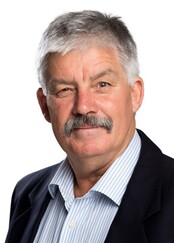
Read the latest edition of Chamber CEO Thoughts, written monthly by Waikato Chamber of Commerce CEO, Don Good.
It is Time to Unify the Waikato
Just two thoughts for you this month, inspired by the Government’s announcement last week called “Simplifying Local Government – a draft proposal”.
In the three decades since the last shakeup in 1989 some councillors have driven division and demarcation, masquerading as independence.
It is time for vision to turn into action:
To unite the Waikato
To rub out the artificial council barriers
To eliminate the pencil lines on a map that cost ratepayers millions
To become stronger together
To be we, not me
To become the Mighty Waikato
There are those that will argue to keep their petty parochial princedoms.
We are so interconnected now that there is no place for insular independence. Technology and a very human desire to create and share prosperity have delivered the opportunity to merge our futures.
We simply need to design and implement a new democratic structure with few boundaries.
We need a logical and cost-effective mix of decentralised, centralised and connected bureaucracy. If we need to centralise some functions, we need to do so away from the past. We need to get out of Hamilton. This change has to be plainly and clearly not a Hamilton takeover.
It is a new Waikato. Shift to the Airport, connect us with the world, the regions and cities of New Zealand, and most importantly to each other in the Waikato. Commerce and community follow arterial routes. Structure has to meet symbolism. The airport is already owned by several of the councils, so ratepayers already have a hand in being the landlord.
Don’t put all your functions in one building, keep many decentralised. Localise that which is ratepayer focussed and connect it, using technology to all who operate in that function, around the region. Keep it as transparent as possible and utilise spare capacity in one part of the region to boost an under resourced team experiencing a spike in demand in another.
Reduce governance and senior leadership team costs while boosting streamlined local expertise.
Other councils have done it, so the pathway is well signposted. Use the lessons they have learnt to avoid pitfalls and deliver efficiencies. It is not new.
Use geography to define our boundaries. The Waikato Regional Council boundaries of the Bombay Hills, Port Jackson, Waihi, the Kaimais, the Mamakus, the Kaimanawas, Ruapehu, and the Tasman Sea are very natural boundaries that won’t change.
The current council model is no longer fit for purpose. Some older local body politicians over the last three decades have imprinted their personal political priorities and we are now paying for them. Too many have made us live beyond our means and the rating agencies have deemed some councils as deserving a downgrade.
We see (and pay for!) the proof of poor performance – rates rises, debt downgrade, disgruntled developers, disappointed businesses, uncoordinated communities, two water entities when one would do, a disdainful and insular bureaucracy, all creating disjointed voices and layer upon layer of unnecessary costs.
This has resulted in a chief at every bend mentality, and a Wellington bureaucracy saying it is too hard to reconcile all the disparate demands from the Waikato.
Consequently, in the past, as highlighted by the water debacle, opportunity to be smart and cost effective has gone begging.
We welcome local government reform.
Advocacy
The four major issues we have advocated for in 2025 are now closer to reality.
The Cambridge to Piarere extension to the Waikato Expressway has been funded and the diggers are due to start next year, the Waikato Medical School construction is underway along with the staff and curriculum, and the Southern Links Expressway has been given sufficient funding to get it ready for construction in 2027.
Thankfully, after almost a decade of advocacy, we are seeing amalgamation being driven by central government.
As 2025 draws to a close, your Chamber looks to 2026 and sees issues like the Waikato Expressway extending from Piarere to Tauranga that need advocating for. Or the reform of the electricity sector that is crucial to business and households needs to be on the agenda as it is a market that has the hallmarks of an oligopoly. Certainly, there must be greater support for that perennial kiwi issue of increasing export growth.
We are keen to get your feedback on business issues you see need advocacy. Let us know.
Have an enjoyable and prosperous 2026.
Focus on your unique selling propositions, develop and bake in your durable competitive advantage, and remember that realistic optimism is a prerequisite for survival.
May your green shoots sprout into mighty totaras.
Regards
Don Good